Introduction
The rapid growth of digital technology has created an increasing demand for faster, more reliable, and highly efficient communication networks. From smart cities and autonomous vehicles to artificial intelligence and the Internet of Things (IoT), modern innovations require a powerful connectivity system capable of handling massive amounts of data in real time. This is where 5G infrastructure plays a critical role.
5G infrastructure is the foundation that supports the next generation of wireless networks. It includes advanced technologies such as small cells, massive MIMO antennas, fiber-optic backhaul, edge computing, and cloud-based network solutions. Unlike previous network generations, 5G is designed not only to improve mobile internet speeds but also to enable completely new digital experiences and industrial applications.
As businesses and consumers continue to adopt connected technologies, 5G infrastructure development is becoming essential for building a faster, smarter, and more connected future.
What Is 5G Infrastructure?
5G infrastructure refers to the collection of hardware, software, and technologies required to build and operate 5G networks. It provides the foundation that allows devices, applications, and systems to communicate with each other through high-speed wireless connections.
A complete 5G infrastructure includes:
- 5G base stations and antennas
- Small cell networks
- Fiber-optic communication systems
- Edge computing facilities
- Cloud-based network platforms
- Advanced network management software
These components work together to deliver faster speeds, lower latency, and greater network capacity compared to previous generations of wireless technology.
Why 5G Infrastructure Is Important
The demand for digital connectivity is growing rapidly. Billions of devices are expected to connect to the internet in the coming years, creating a need for networks that can manage enormous amounts of data.
Traditional 4G networks were mainly designed for smartphones and mobile browsing. However, 5G infrastructure is built to support a wide range of technologies, including:
- Smart cities
- Autonomous vehicles
- Industrial automation
- Remote healthcare
- Augmented reality (AR)
- Virtual reality (VR)
- Internet of Things (IoT) applications
By providing faster and more reliable communication, 5G infrastructure is becoming the backbone of future digital transformation.
Key Components of 5G Infrastructure
1. Small Cell Networks
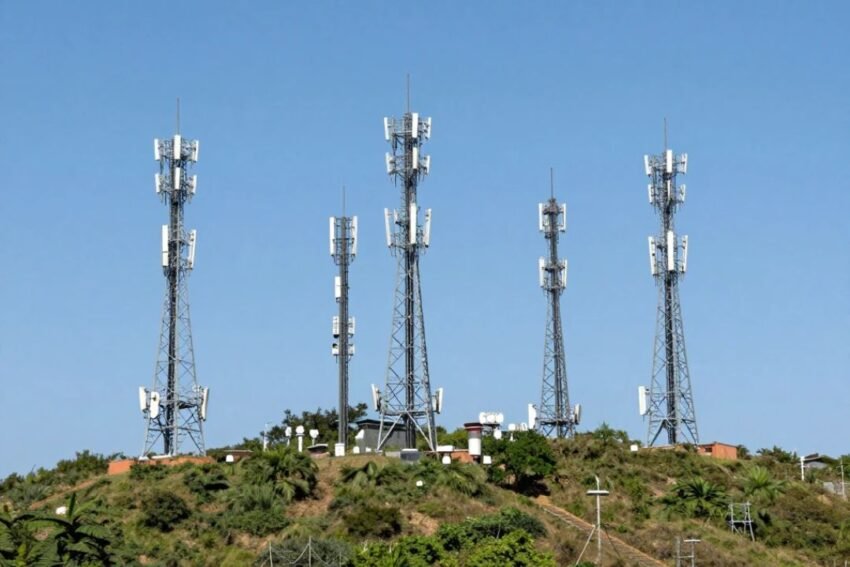
Small cells are one of the most important parts of 5G infrastructure. Unlike traditional large cell towers, small cells are low-powered wireless stations placed closer to users.
Because 5G often uses higher-frequency radio waves, known as millimeter waves, signals have shorter ranges and can be blocked by buildings or obstacles. Small cells help solve this problem by improving coverage and maintaining strong connections.
Small cell networks are especially important in:
- Urban areas
- Stadiums
- Airports
- Shopping centers
- Business districts
They allow more users and devices to access high-speed connectivity simultaneously.
2. Massive MIMO Technology
Massive Multiple Input Multiple Output (MIMO) is an advanced antenna technology used in 5G networks. It uses a large number of antennas to send and receive multiple data signals at the same time.
The benefits of massive MIMO include:
- Higher network capacity
- Faster data transmission
- Improved signal quality
- Better performance in crowded locations
This technology helps 5G networks serve thousands of connected devices efficiently.
3. Fiber-Optic Backhaul
Fiber-optic networks provide the high-speed connection between 5G towers, data centers, and the internet. They are a crucial part of 5G infrastructure because wireless networks depend on strong wired connections behind the scenes.
Fiber-optic technology offers:
- Extremely high bandwidth
- Low signal loss
- Faster data transfer
- Greater reliability
Without advanced fiber networks, the full potential of 5G technology cannot be achieved.
4. Edge Computing
Edge computing is another essential element of 5G infrastructure. It involves processing data closer to where it is generated instead of sending all information to distant cloud servers.
This reduces latency and allows faster responses for applications that require real-time communication.
Examples of edge computing applications include:
- Self-driving vehicles
- Smart factories
- Online gaming
- Remote medical procedures
- Security systems
By combining 5G with edge computing, organizations can achieve faster and more efficient digital operations.
5. Cloud-Based Network Systems
Modern 5G networks rely heavily on cloud technologies. Cloud-based infrastructure allows network operators to manage resources more efficiently and provide flexible services.
Important cloud technologies in 5G include:
- Network virtualization
- Software-defined networking (SDN)
- Network function virtualization (NFV)
These technologies make networks easier to upgrade, manage, and customize according to different user requirements.
How 5G Infrastructure Is Transforming Industries
1. Smart Cities
5G infrastructure is a key technology behind the development of smart cities. It enables communication between millions of connected devices that improve urban services.
Smart city applications include:
- Intelligent traffic systems
- Smart street lighting
- Connected public transportation
- Environmental monitoring
- Digital public services
With real-time data collection and analysis, cities can become more efficient, safer, and environmentally friendly.
2. Healthcare Innovation
The healthcare industry is benefiting significantly from advanced 5G infrastructure. High-speed and low-latency networks allow medical professionals to provide improved healthcare services.
5G supports:
- Remote patient monitoring
- Telemedicine services
- AI-based medical analysis
- Robotic-assisted operations
Patients in remote locations can access quality healthcare without traveling long distances.
3. Manufacturing and Industrial Automation
The manufacturing sector is moving toward smart factories powered by automation and connected technologies. 5G infrastructure allows machines, robots, and sensors to communicate instantly.
Benefits include:
- Real-time production monitoring
- Improved efficiency
- Reduced operational costs
- Predictive maintenance
This transformation is often called Industry 4.0, where digital technologies improve manufacturing processes.
4. Autonomous Transportation
Future transportation systems will depend heavily on reliable 5G infrastructure. Autonomous vehicles require continuous communication with sensors, traffic systems, and other vehicles.
5G enables:
- Faster vehicle-to-vehicle communication
- Real-time navigation updates
- Improved road safety
- Efficient traffic management
This will help create safer and smarter transportation networks.
5. Internet of Things (IoT)
The growth of IoT depends on strong and reliable connectivity. 5G infrastructure allows billions of devices to communicate efficiently.
IoT applications supported by 5G include:
- Smart home devices
- Wearable technology
- Agricultural monitoring systems
- Industrial sensors
- Connected appliances
As IoT adoption increases, 5G networks will provide the foundation for a highly connected world.
Benefits of Advanced 5G Infrastructure
Faster Data Speeds
5G infrastructure enables extremely fast internet connections, allowing users and businesses to transfer large amounts of data quickly.
Lower Latency
Reduced communication delays make real-time applications possible, including gaming, automation, and remote operations.
Increased Network Capacity
5G can support a massive number of connected devices without reducing performance.
Improved Reliability
Advanced network technologies provide more stable and consistent connections.
Business Innovation
Companies can develop new products and services using advanced connectivity solutions.
Challenges in Building 5G Infrastructure
Although 5G infrastructure offers many benefits, its development comes with several challenges.
High Deployment Costs
Building 5G networks requires significant investment in equipment, fiber networks, and new communication sites.
Coverage Issues
High-frequency 5G signals have limited range, requiring more small cells and infrastructure installations.
Security Risks
As more devices become connected, cybersecurity becomes a major concern. Protecting networks from cyber threats is essential.
Regulatory Challenges
Governments and organizations need to manage spectrum allocation, safety standards, and deployment regulations.
Despite these challenges, continuous innovation is helping accelerate global 5G infrastructure expansion.
The Future of 5G Infrastructure
The future of 5G infrastructure is closely connected with emerging technologies such as artificial intelligence, automation, and advanced computing. As networks become more powerful, they will support new applications that were previously impossible.
Future developments may include:
- Fully connected smart cities
- Advanced robotics
- AI-powered networks
- Immersive virtual experiences
- More efficient industrial systems
5G infrastructure will also serve as a foundation for future wireless technologies, including the development of 6G networks.
Conclusion
5G infrastructure is the foundation of next-generation networks and a driving force behind the future of digital connectivity. By combining advanced technologies such as small cells, massive MIMO, fiber optics, edge computing, and cloud networking, 5G creates a powerful communication environment for businesses, industries, and consumers.
From smart cities and healthcare to autonomous transportation and IoT, 5G infrastructure is transforming the way the world connects and operates. Although challenges such as cost, security, and deployment complexity remain, the long-term benefits of 5G infrastructure will continue to shape a faster, smarter, and more connected future.